Jeff Yang and Phil Yu present an unfiltered conversation about what's happening in Asian America.
What's up, podcast listeners? We've got another episode of our podcast They Call Us Bruce. (Almost) each week, my good friend, writer/columnist Jeff Yang and I host an unfiltered conversation about what's happening in Asian America, with a strong focus on media, entertainment and popular culture.
In this episode, we welcome our old friend Oliver Wang, professor of sociology, curator for the Japanese American National Museum exhibition Cruising J-Town: Behind the Wheel of the Nikkei Community, and author/editor of the exhibition's companion book. We talk about the rich history of Japanese American car culture in Los Angeles, its significance in shaping community identity, the impact of urban development, the surprising gamesmanship involved in street racing, and the complex tapestry of stories still waiting to be uncovered in Asian American history. Oliver also shares some of his research on an important question: why is "Bizarre Love Triangle" the unofficial anthem for Asian Americans (of a certain age)?
Asian Americans, we have an anthem. If you are Asian American of a certain age, there is a song that can immediately pull us into circle formation on the dance floor like synth siren's song. I am, of course, talking about "Bizarre Love Triangle" by New Order. If you know, you know. But why? What is about this specific track that has resonated so strongly with a generation of Asian Americans?
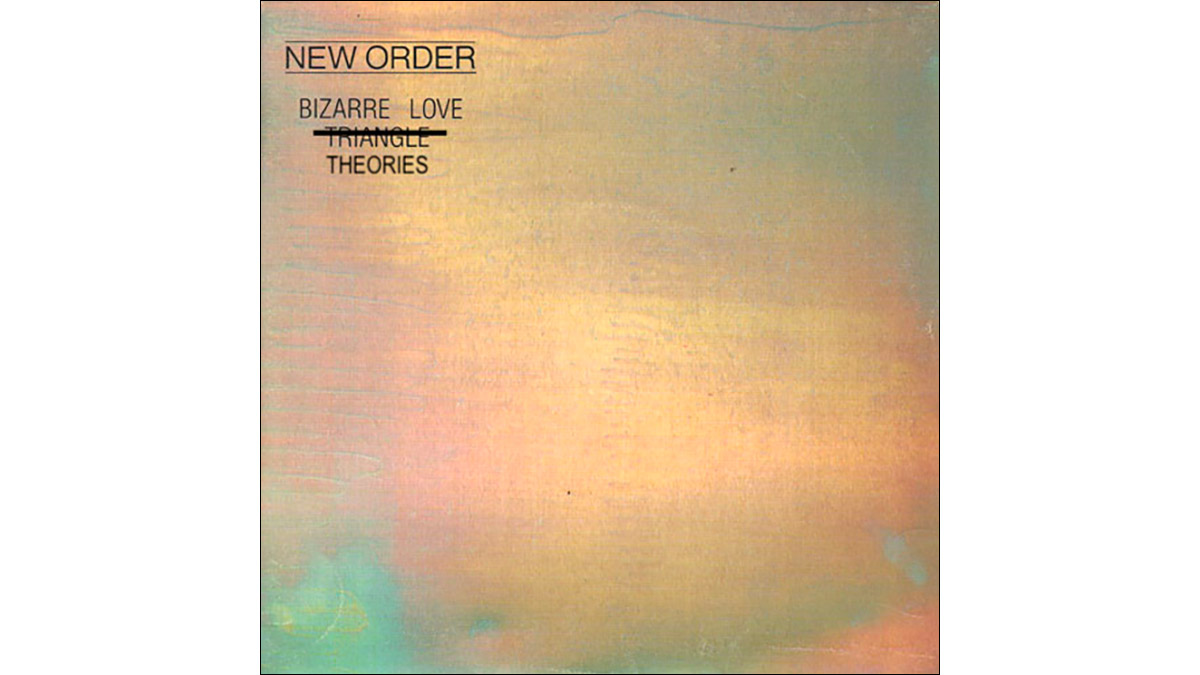
Our friend, sociology professor, DJ and music scholar Oliver Wang is formally asking the questions about "Bizarre Love Triangle" and doing some important work for the culture. Through a research study entitled "Bizarre Love Theories," he intends to get to the bottom of why New Order's 1986 dance chart hit has been embraced as an unofficial anthem of Asian America. And he needs your help. Check it:
And Other Things to Know From Angry Asian America.
Trump Tells Asian American Reporter to "Ask China" About Deaths
Donald Trump abruptly ended his Monday press conference after a contentious exchange in which he asked an Asian American journalist to "ask China" about her question and then refused to take a query from another White House reporter. CBS News correspondent Weijia Jiang asked Trump why he sees coronavirus testing as a global competition when more than 80,000 Americans have died. "Maybe that's a question you should ask China," Trump told Jiang. "Don't ask me. Ask China that question, OK?" And that was the beginning of the end of the press conference.
* * *
Violence Against Asian Americans Is on the Rise -- But It's Part of a Long History
If you somehow think the rise of anti-Asian sentiment amidst COVID-19 is something new, take short and long look back at the history of Asians in America -- something you can see in the epic new five-hour documentary series Asian Americans, which premieres on PBS this week. All five parts are available for viewing in their entirety on pbs.org.
* * *
Kevin Kwan's New Book is His Most Decadent Yet
How do you follow up one of the most successful trilogies of the 21st century? For Kevin Kwan, whose Crazy Rich Asians books have sold millions of copies and spawned a $200-million-plus movie, the answer rested in his greatest inspiration: A Room With a View. His new novel, Sex and Vanity, plays like a straight tribute to the E.M. Forster novel -- but in this version, the story moves between Capri and New York, tackling the nuances of Asian American identity in the process.
* * *
API Heritage Jam
DJs Phatrick and O-Dub are teaming up for a livestream mix highlighting Asian and Asian American artists. Wednesday, May 13 at 4pm Pacific. Follow along on Instagram Live at either @djphatrick or @soulsides.
* * *
CAAMFest Online: Heritage at Home
The Center for Asian American Media presents their reimagined festival experience, CAAMFest Online: Heritage at Home from May 13-22. The online festival will provide a platform to gather virtually in celebration of Asian Pacific American Heritage Month. The program features over 20 digital events, ranging from online film screenings to interactive panels, watch parties, and house parties with live performances, all free of charge. Learn more and reserve your tickets here. Join the conversation using #CAAMFestOnline and #HeritageAtHome.
Study examines the eating habits of Asian Americans and Pacific Islanders.
Our friend Oliver Wang, professor of sociology at California State University Long Beach, is launching a pilot study to explore the eating habits of Asian Americans and Pacific Islanders, and he could use your help.
Oliver says the study came from a simple question: how do AAPIs eat? Specifically, he and co-author Mike Hoa Nguyen were interested in how those of us raised in the United States make decisions about what to cook at home or eat in restaurants. How often do we prioritize some kind of Asian food -- whether it’s the food linked to our family heritage or just any kind of Asian food -- when we think about what we want to eat?
"For me, that’s pretty important," Oliver says. "I live in Los Angeles's San Gabriel Valley -- practically the national capital for Asian American cuisine -- and it's easy for me to take for granted how many restaurants and markets I have access to. It certainly shapes my meal decisions, whether I'm getting a bite out to eat or I'm cooking for my family."
Readers of this site are already well aware of the recent kerfuffle over Zhang Yimou's upcoming action fantasy epic, The Great Wall, aka "that film where Matt Damon fights dragons in China." Unlike other Hollywood films with a Great White Savior Complex, The Great Wall is more complicated because it's both Chinese-directed and co-produced (Zhang himself has vigorously defended the film's cultural politics). Regardless, all the news about The Great Wall instantly reminded me of a very different Great Wall, one that also happened to be a Chinese/American co-production and though it was certainly less controversial, it was no less historical: Peter Wang's A Great Wall (1986).
Thursday, May 14 at the Japanese American National Museum
This is for you LA hip hop fans... Next Thursday in Little Tokyo, join in on an intimate conversation with the legendary Mountain Brothers, the first Asian American hip hop act to sign with a major label. Chops (Scott Jung), Peril-L (Christopher Wang), and Styles Infinite (Steve Wei) sit down with moderator Oliver Wang, associate professor of sociology at California State University, Long Beach, to share about their pioneering journey. It's happening May 14 at the Japanese American National Museum.
I'm on vacation! Taking a much-needed break. But don't worry. While I'm away, I've enlisted some great guest bloggers to keep things going around here. Here's Oliver Wang on "The Ballad of Chol Soo Lee."
On a recent visit back to the Bay Area, I stopped by my favorite record store on the planet, the Groove Merchant, and waiting for me was this 7" called "The Ballad of Chol Soo Lee." The store's owner, "Cool" Chris Veltri knows I have a thing for Asian American records and this was practically an uber-example.
Once again, it's time to meet the Angry Reader of the Week, spotlighting you, the very special readers of this website. Over the years, I've been able to connect with a lot of cool folks, and this is a way of showing some appreciation and attention to the people who help make this blog what it is. This week's reader is scholar/writer/DJ Oliver Wang, co-author of one of my favorite blogs, Poplicks.